Contemporary Dependencies: Young Hungarian Artists
12. 11. 2026 18:30
Muzeum umění Olomouc / Olomouc
Olomouc
Openings

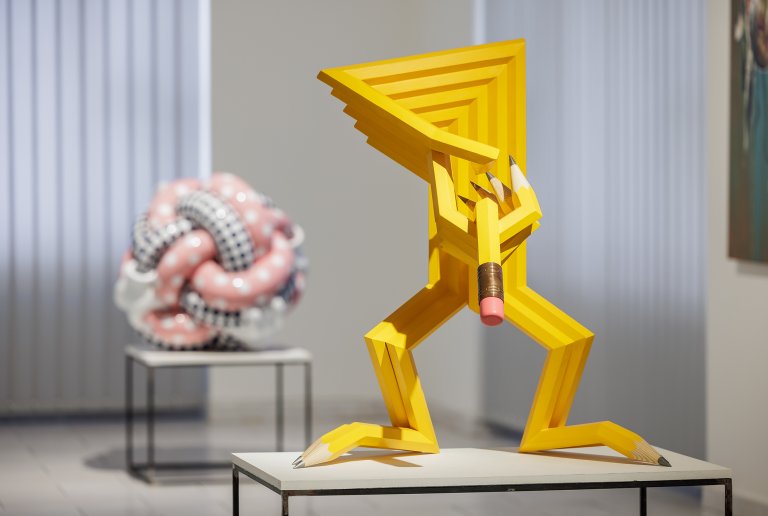
In the Czech context, there are not many opportunities to explore Hungarian visual art in a broader context. Even rarer are opportunities to observe its contemporary forms, themes, and generational shifts. The exhibition Contemporary Dependencies therefore offers the Czech public a unique opportunity to become acquainted with the artists and works that have helped shape the Hungarian painting and sculpture scene over the past two decades.
Selected works illustrate the transformation of Hungarian art from the fall of the Iron Curtain to today’s post-digital environment. The years of birth of the individual artists are not merely biographical details here, but indicate distinct historical experiences. It is precisely these experiences that have shaped each generation’s relationship to media, technology, nature, society, the image, and their own bodies.
The exhibition is divided into three major sections. The first, titled Between Systems, presents the work of artists born in the first half of the 1980s. This “generation of transition” spent its childhood during the late era of state socialism but came of age during the political and economic transformation of the 1990s. They entered the art scene around the turn of the millennium, that is, in the context of a market economy, a newly emerging gallery scene, and advancing internationalization.
The second section, Inside the Transformation, features works by artists born in the late 1980s. This is a generation shaped by the market economy, advertising, popular culture, the internet, and European integration. Its members entered the art scene around 2010, a time of economic uncertainty, the rapid development of social media, and the associated global sharing of images, information, and visual strategies.
The third part of the exhibition project, On the Internet, is dedicated to the work of Generation Z artists—that is, artists born primarily in the second half of the 1990s. For this generation, digital technology is no longer a new tool but a natural environment. The internet, mobile communication, social media, video games, and global image databases enter their work as a natural part of everyday experience. The result is a blurring of the boundaries between the physical and the virtual, the traditional and the technological, and high art and popular art.
The time frames for the individual sections are approximate. Generational experiences overlap, and some works naturally fit into multiple contexts at once. The purpose of this categorization is not to create three distinct groups, but rather to illustrate the gradual transformation of the conditions in which contemporary Hungarian art is created—from the experience of transformation, through the global sharing of images, to a world in which the digital environment helps shape the very way we perceive reality.
More information here.